I read something recently that surprised and disappointed me, mainly because I thought we'd all agreed we weren't going to do this anymore.
It was written by a couple of students preparing for a school expedition overseas. They were clearly excited about it, working hard to raise some of the money themselves and approaching local businesses for support. All great.
What caught my attention was the way they described the purpose of the expedition. Alongside the trekking, wildlife, conservation and experience of another culture was the idea that they would be travelling there to help provide a better life for people living in remote communities.
That isn't particularly unusual language in school adventure travel. It's been around for years, and I know I've used some of it myself in the past. But I thought we'd had our eyes opened some time ago to the problems with this way of presenting overseas travel, which makes it troubling to see some providers still leaning heavily on it because it helps to sell a trip.
The frustrating thing is that there are already two perfectly good stories sitting underneath all this.
The first is about young people wanting to do something ambitious. A significant overseas adventure isn't cheap, so they decide to contribute towards the cost themselves. They use their initiative, organise events, wash cars, take on challenges, find jobs, approach businesses, sell things and generally commit themselves to making it happen.
I think that's brilliant, and there are all sorts of lessons in earning your way towards something you really want: confidence, resilience, communication, budgeting, dealing with rejection and the satisfaction of knowing that you played a part in creating your own opportunity.
The second story is what happens when they eventually get there. They might trek through rainforest, cross mountains, encounter wildlife, eat unfamiliar food, struggle with a different language, spend time with people whose lives look very different from their own and discover things about a country that no classroom or documentary could properly teach them.
That's pretty brilliant too.
So I'm left wondering why we seem to need a third - and frankly pretty dubious - story in which our students travel overseas to make life better for the people who already live there.
Who is helping whom?
There's a curious switch in the way we talk about these experiences which I think is worth examining.
Put a British student in a rainforest, take them into a conservation centre or introduce them to an unfamiliar ecosystem, religion, language or landscape and we naturally understand that they're there to learn.
Introduce them to people who are economically poorer than they are, however, and somehow the relationship can change. Suddenly, they're there to help.
I'm certainly not suggesting young people shouldn't contribute. There are excellent organisations around the world doing genuinely valuable community and conservation work, often developed over many years with local people. If an established project has identified something useful that a visiting school group can contribute to, there can be real value in getting involved.
And that value doesn't necessarily need to be measured in how many bricks somebody lays. Working alongside people can be a fantastic way to meet them. Shared endeavour breaks down barriers, and conversations happen while you're painting, planting, digging or carrying things that probably wouldn't happen if you simply arrived, looked around and got back on the bus.
Students can take pride in having contributed to something tangible, while local projects can benefit from additional hands, funding and attention. I don't want us to become so nervous about the pitfalls of voluntourism that young people end up standing at a respectful distance and merely observing. By all means, muck in.
We just need to be accurate about what’s happening.
If a water system needs installing in a village, the chances are there are local people considerably better qualified to install it than a group of British teenagers who have just arrived and plan to stay for a few days. If a school needs building, our students are unlikely to be bringing construction expertise that doesn't already exist nearby.
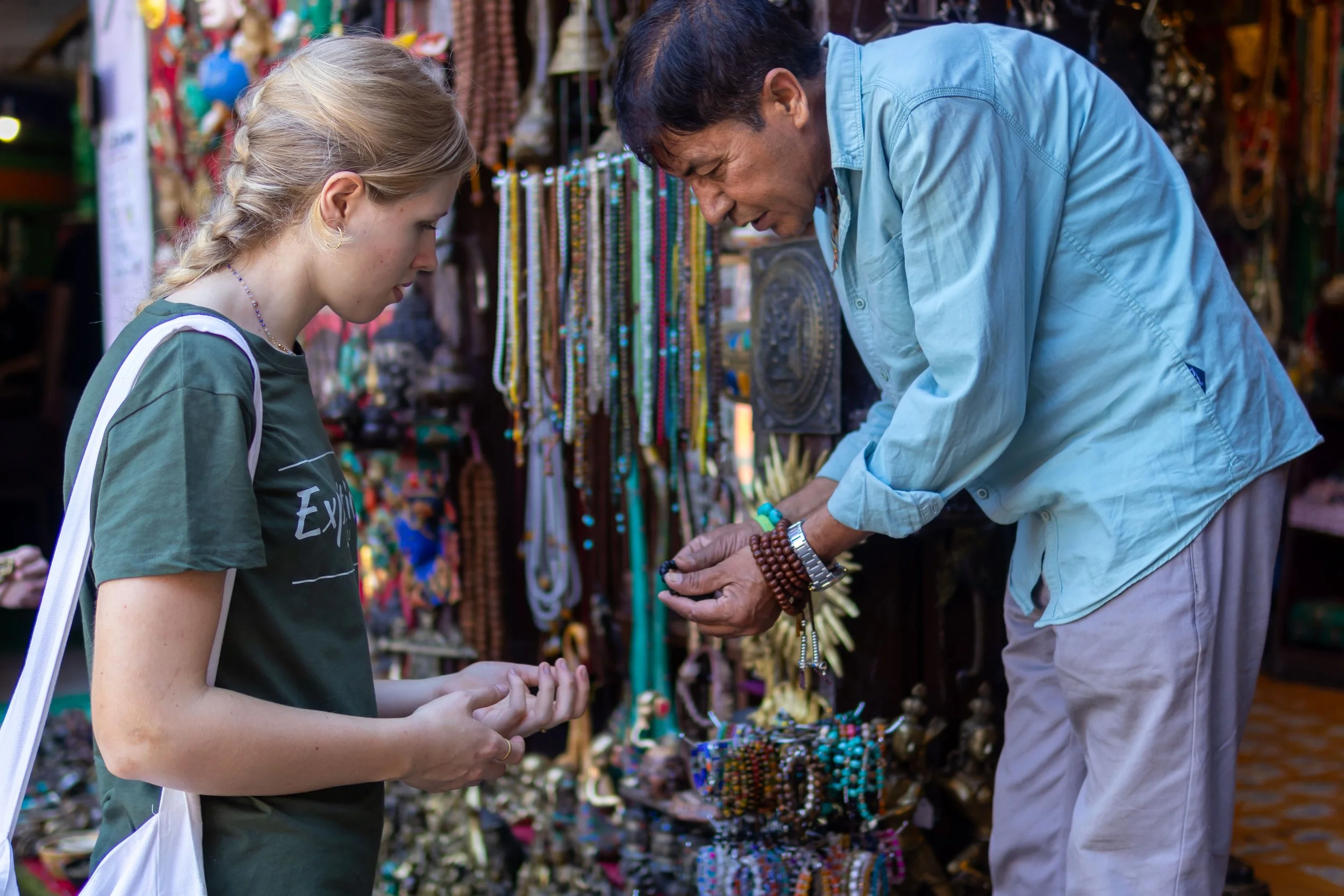
More importantly, the people we meet aren't simply waiting for us to arrive with something to give them. They may have considerably more to teach our students about community, family, resilience, happiness, the natural environment or simply another way of seeing the world than our students could possibly teach them during a short visit.
For me, recognising that makes the encounter more valuable, not less. We can absolutely do something useful while we're there; we just need to be much more thoughtful about the story we tell ourselves about who is helping whom.
The same thing happens before we leave
I've also been thinking about the word fundraising, because it's deeply embedded in the school expedition world. Students are routinely encouraged to fundraise towards their trip, and I've seen some incredibly inventive examples over the years.
Again, I strongly support the principle. I just think we need to be clearer about what we're actually asking people to support.
If a student organises a quiz night and the proceeds help pay for their flight to Nepal, or runs a half marathon and asks people to sponsor them towards the cost of their expedition, that's perfectly legitimate. If a local business gives them £100 towards their trip, that's a wonderfully generous business supporting a young person's ambition.
The awkwardness arrives when we dress that up in the language of charity.
Terms such as supporting our cause and making a difference can create the impression that somebody's money is ultimately going to a charitable beneficiary overseas when it's actually helping a young person pay for their own travel. I don't think there's any need for that.
There’s no shame whatsoever in a teenager saying, “I want to do something extraordinary. It costs quite a lot of money. I'm going to work really hard to make it happen. Would you help me?”
If anything, that’s more compelling.
At Bolder, we've started calling this Make It Happen, deliberately avoiding the language of fundraising. We want young people to take some ownership of their adventure where they can. Not every family has the same financial circumstances and not every student will approach it the same way, but earning, creating, organising and persuading can all become part of the experience.
There's plenty of enterprise, initiative and ownership in that without pretending it's philanthropy.
Travel doesn't need quite so much justification
I sometimes wonder whether some of this comes from an insecurity our industry has developed about travel itself.
A school asking families to spend a significant amount of money taking students to Borneo, Nepal, Morocco or Tanzania can feel difficult to justify, and perhaps attaching a bigger moral purpose to the trip has helped us to do that over the years. We aren't simply travelling; we're giving back, changing lives and making a difference.
Those are powerful phrases. They're emotionally appealing and, let's be honest, they're commercially useful.
I'm just not convinced we need them. And they’re certainly disingenuous.
Travel is more than capable of justifying itself when it's done well. Take a young person away from home and put them somewhere genuinely unfamiliar. Ask them to carry their own kit and let them experience being hot, cold, tired, fascinated, confused and occasionally uncomfortable. Let them navigate a different culture and find ways to communicate with somebody when neither speaks much of the other's language.
Let them see extraordinary landscapes and very ordinary homes. Let them discover that people with less money aren't necessarily less happy, and that some of the things they assumed were universal are actually just British. Let them laugh with people they didn't expect to have anything in common with, get things wrong, listen, adapt and gradually become more comfortable with being somewhere unfamiliar.
Then bring them home.
There is so much educational value in all of that that I don't think we need to bolt a heroic narrative onto it.
And none of this means stripping community engagement or conservation work out of an adventure. I want our students to have those experiences. I just want us to approach them with enough respect and curiosity to understand properly what we're taking part in.
What that means for us
At Bolder, this isn't something we intend simply to tidy up in our marketing language. We're going to talk about it openly with our teams, and we'll do so unashamedly.
If students are working towards the cost of their own adventure, we'll encourage the hell out of it, while also helping them understand why asking somebody to support their adventure is different from asking for a charitable donation. That's why we'll talk about Making It Happen, rather than fundraising.
When our teams travel overseas and contribute to community or conservation projects, we'll encourage them to think properly about those too. Who identified the need? Who owns the project? Who will still be there working on it after we've gone home? What are our students genuinely contributing? And what might the people they're supposedly there to “help” have to teach them?
That will inevitably mean challenging some very familiar language around giving back, changing lives and making a difference. Those things can happen, of course, and I absolutely want young people to leave home believing they have the ability to make a positive contribution to the world.
I just don't want them to believe that travelling from a wealthy country to a poorer one automatically makes them the important people in the story.