Field Notes: Backing Local Expertise in the Atlas Mountains
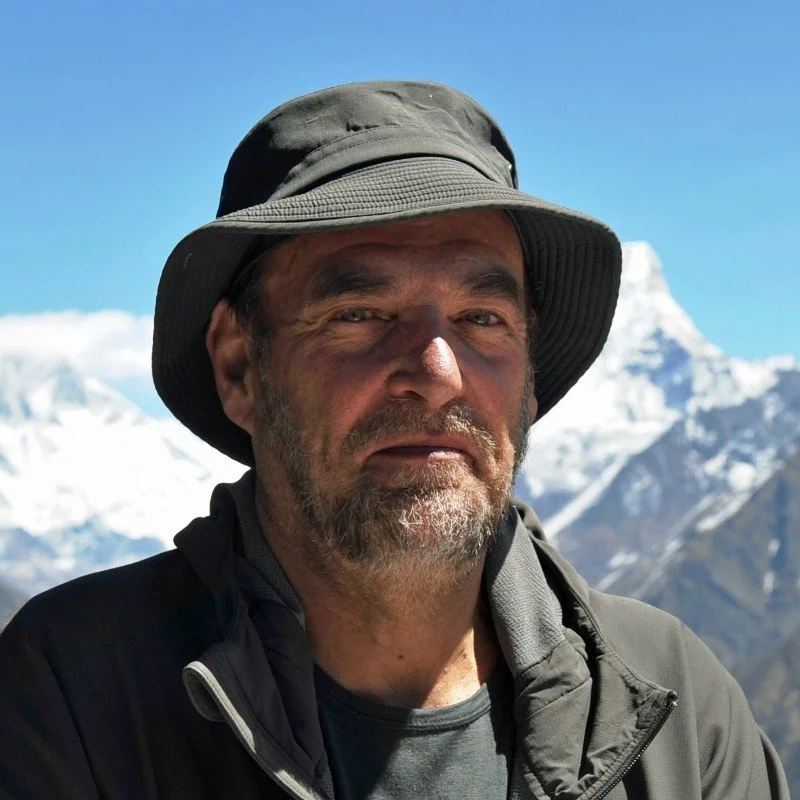
An Adventure Journal feature by Alan Ward IML, with editorial context from Bolder
Over the past three years, I’ve had the privilege of working in the Atlas Mountains of Morocco, volunteering alongside my colleague, Helen (Mountain Leader, Bryn Walking), to support Berber mountain guides based at the Kasbah du Toubkal.
There was never any question about the their experience. These are guides who know Mount Toubkal (4,167m) and the surrounding valleys intimately - people who have spent their lives moving confidently through this landscape in all seasons. What they lacked wasn’t skill or judgement, but access to formal, internationally recognised accreditation. That’s where we felt we could add something useful.
Working with the UIAA (International Climbing and Mountaineering Federation) and REC (Rescue Emergency Care), we helped design and deliver a five-day Mountain Skills training programme, adapted carefully to the local context. Across three visits between 2023 and 2025, twenty Berber guides completed the programme to a consistently high standard. The training combined classroom-based theory with extended time on the hill.
Day one focused on mountain skills theory and familiarisation with the principles of the UK Mountain Training Mountain Skills syllabus - acknowledging that the UK qualification itself cannot be delivered outside the UK, but that its foundations remain relevant.
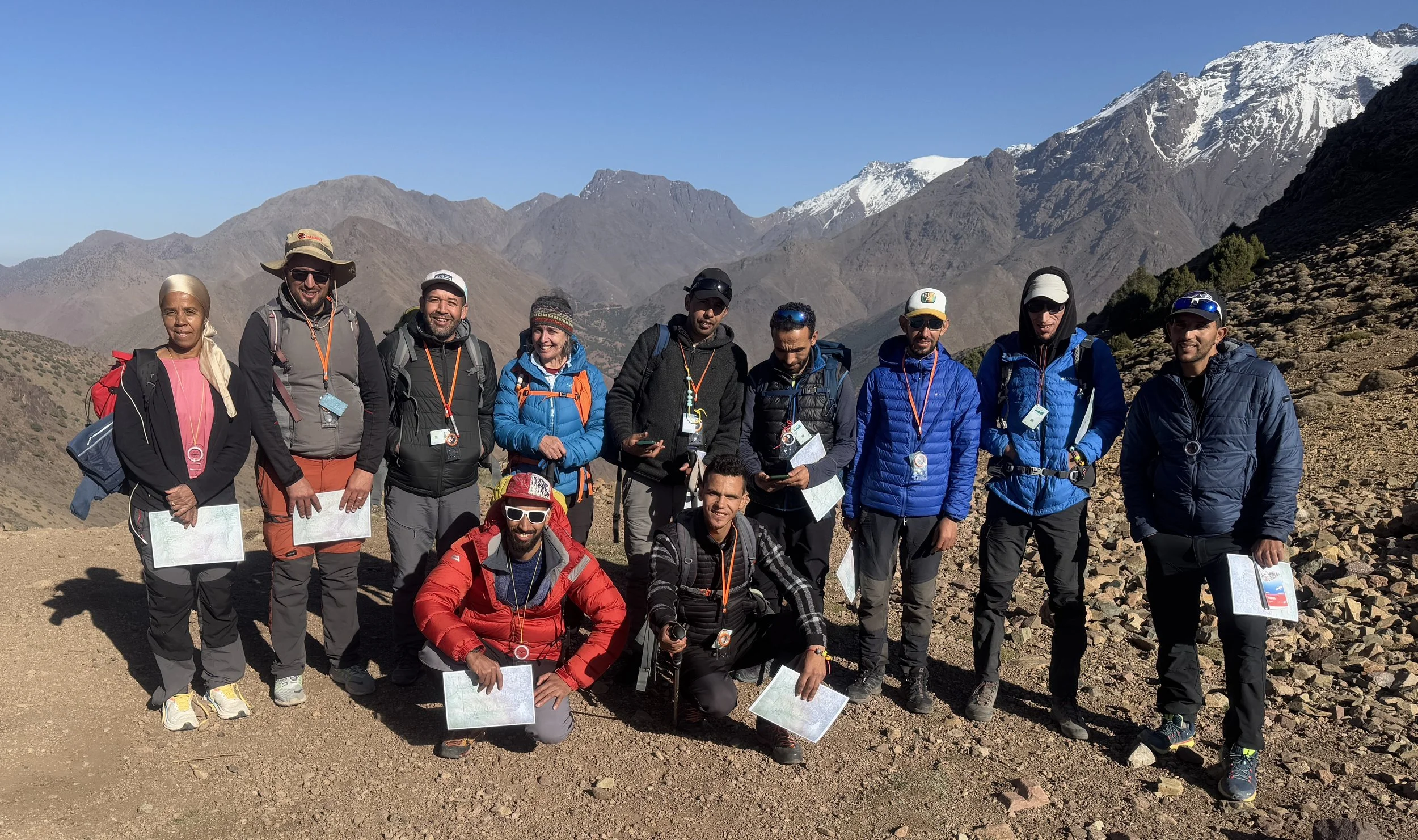
Days two to four formed the heart of the programme: a three-day expedition out of the Imlil Valley, crossing the Tizi n’Mzik (2,489m) and descending into the Azzaden Valley, where we stayed at a trekking lodge for two nights. The route then continued back to Imlil via the Tizi Oudite (2,219m), using newly constructed contouring paths funded by the Moroccan government and built by the guides themselves with labour from local villages.
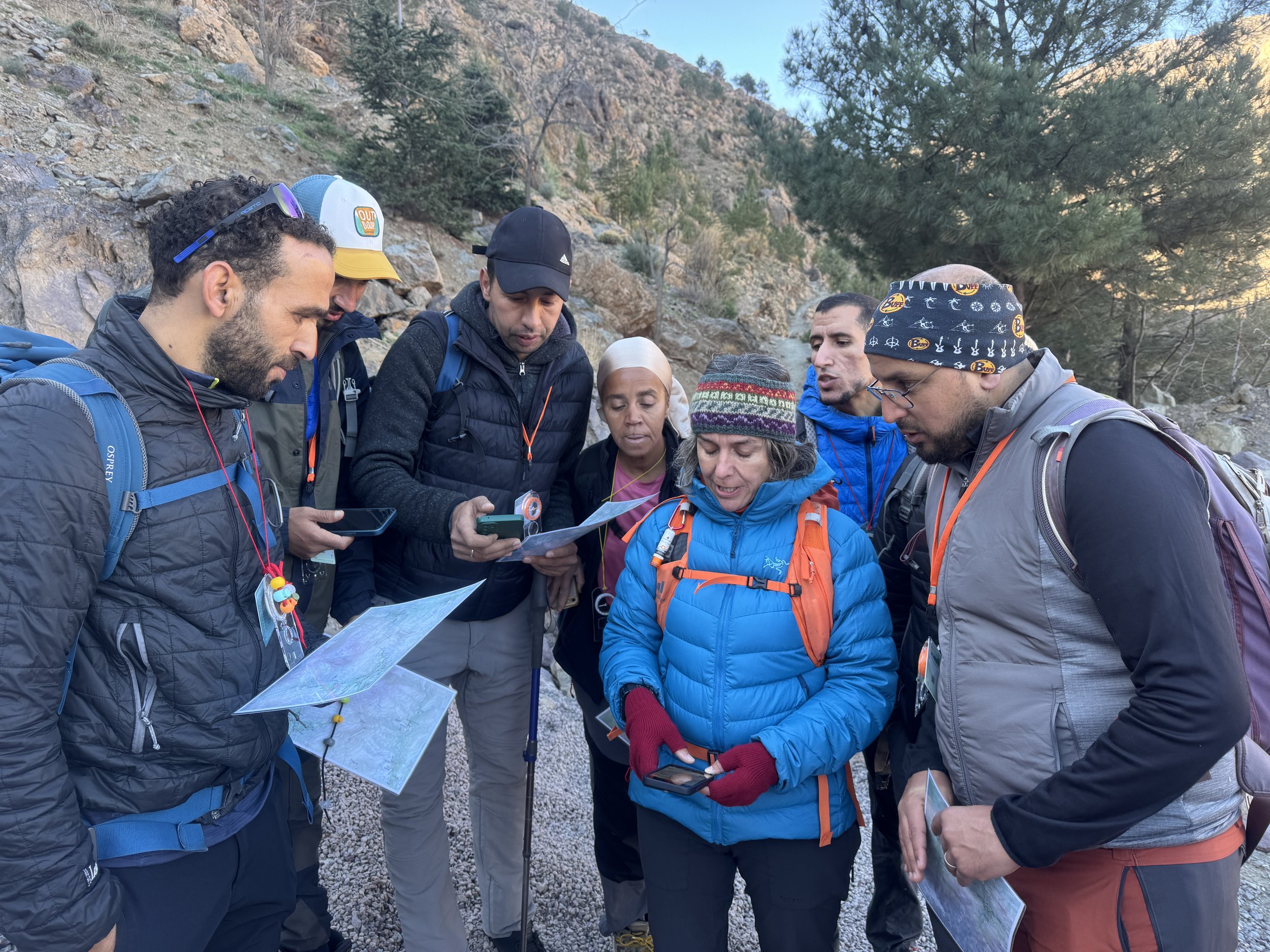
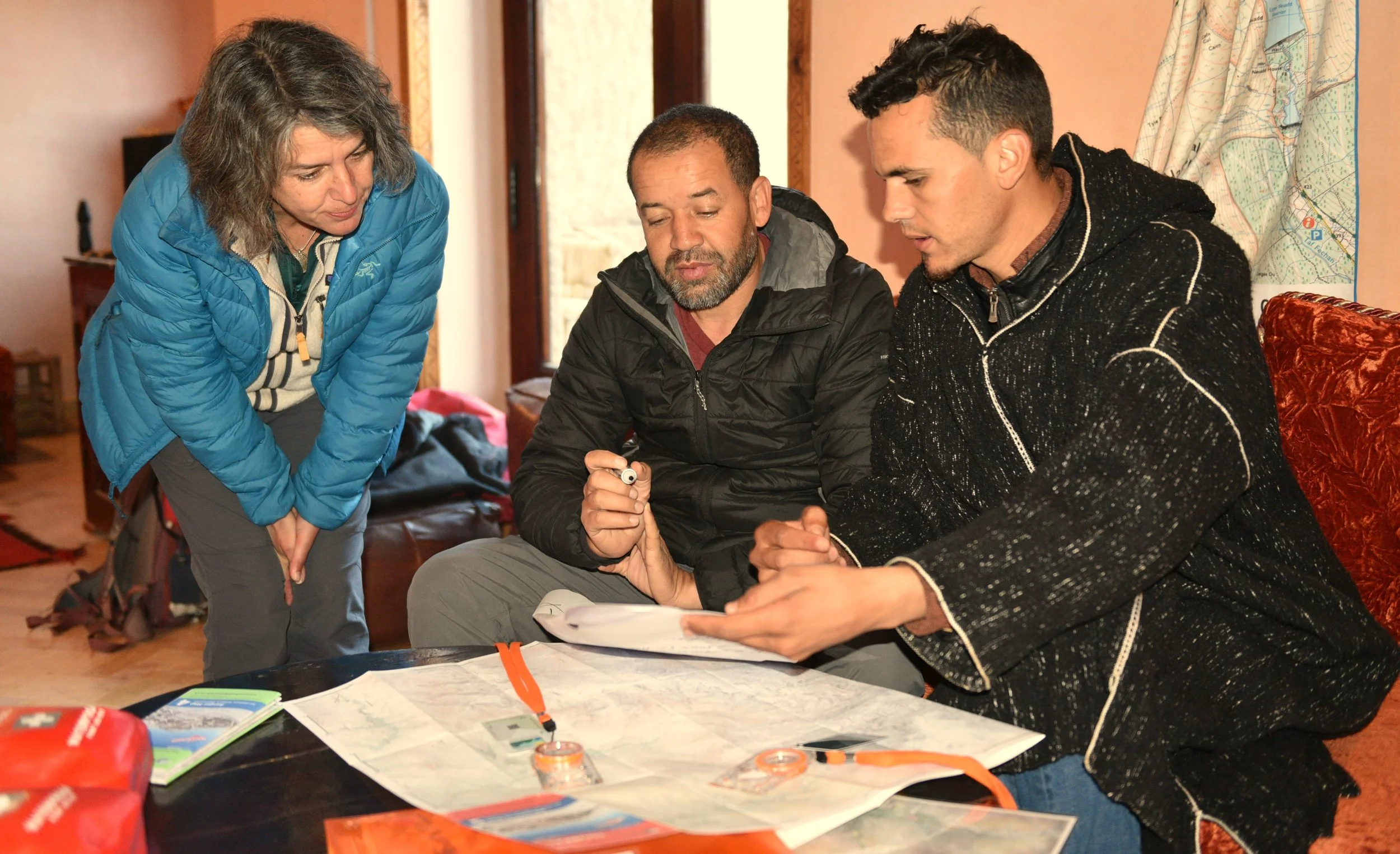
One of the most interesting elements was navigation. While the guides’ terrain knowledge is exceptional, navigating by map and compass was new to many of them. Watching highly experienced mountain professionals engage with these tools for the first time - and quickly integrate them into their existing understanding of the landscape - was a real highlight.
During a day-to-night navigation exercise, Helen’s knowledge of the night sky added an unexpected dimension, and this session in particular was hugely enjoyed by the group.
This three-day route is now offered by the Kasbah du Toubkal as their “Trekking in Style” itinerary. It provides an excellent alternative for visitors who want an insight into the region without attempting the summit of Toubkal itself.
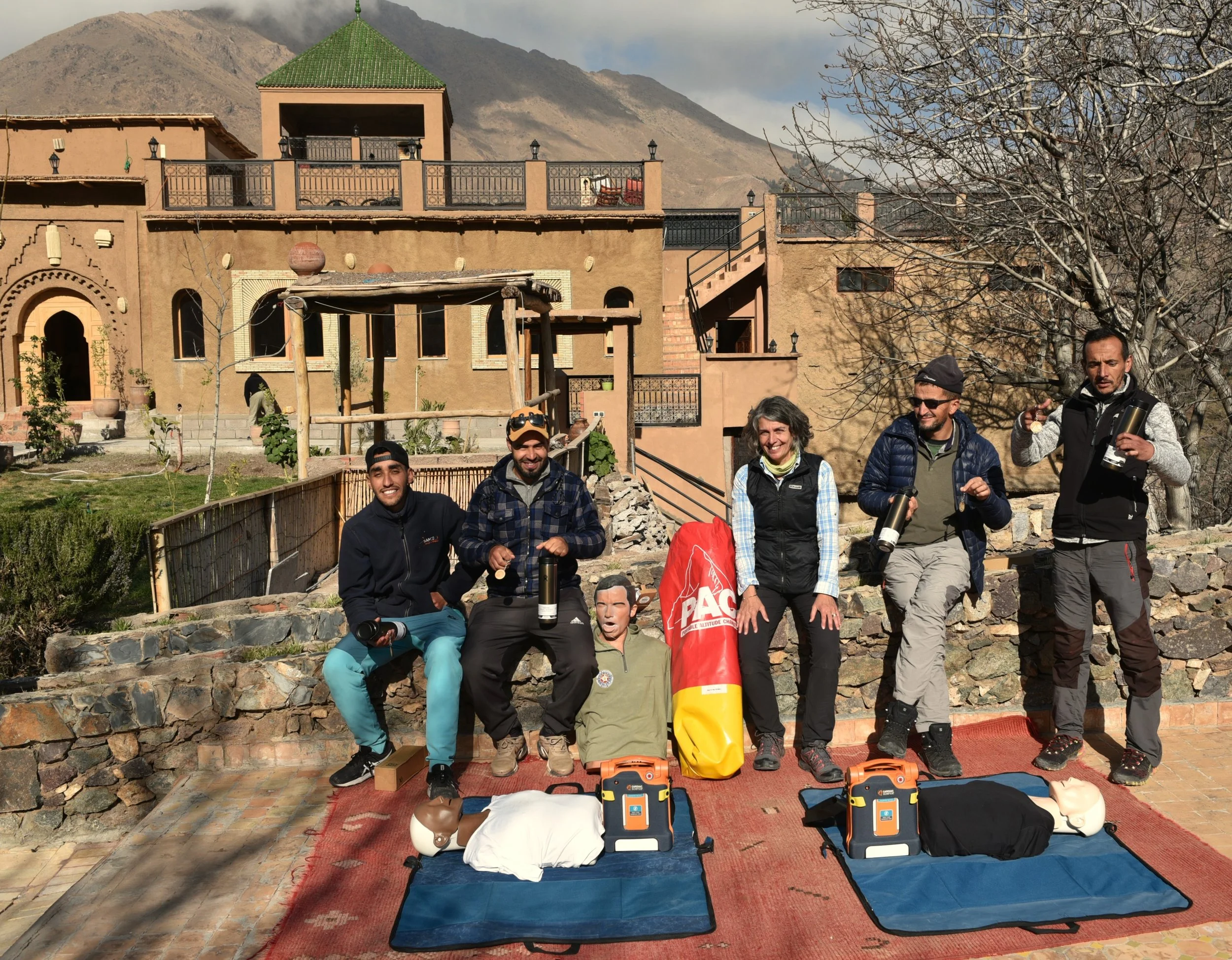
Day five was dedicated to Trekking First Aid. I delivered a six-hour REC-certified course, after which the guides completed the UIAA’s online Mountain Skills assessment. All passed to a high standard.
For Helen and me, the most rewarding part of the programme was seeing vast, lived experience translated into internationally recognised qualifications. The guides were rightly proud of their achievements, and deeply appreciative that the training respected their existing expertise rather than trying to replace it.
On my final visit, I returned alone to refresh the guides’ REC certification and to deliver additional first aid training. This included a REC Life Saver course for staff at the Kasbah du Toubkal, and for a group of housemothers supported by the Education For All (EFA) Morocco charity.
EFA provides safe accommodation, education and specialist support for around 500 girls from some of Morocco’s most underserved communities. Training around twenty housemothers was a pleasure - they were engaged, energetic, and keen to learn skills that could make a real difference in their daily work.
Working with the guides, the Kasbah team, and the wider community over these three years has been deeply satisfying. It’s a reminder that good adventure travel isn’t about importing expertise wholesale - it’s about recognising what’s already there, and strengthening it in ways that last.
Lahcen Igdem, Manager at the Kasbah du Toubkal, summed it up neatly: “Thank you, Helen and Alan. All our mountain guides really appreciate your help.”
Bolder Editorial - Why this matters
Stories like this rarely make headlines but they sit at the heart of what good adventure travel looks like.
Morocco is one of Bolder’s key adventure destinations. The Atlas Mountains offer real challenge, extraordinary landscapes, and a depth of culture that rewards those who take the time to engage properly. But experiences like these only work when they’re built on strong, long-term partnerships with the people who live and work there. What stands out in Alan’s account isn’t just the training itself, but the approach.
The Berber guides around Toubkal didn’t need outsiders to teach them how to be in the mountains. They needed access; to recognised frameworks, shared language, and qualifications that allow their expertise to be understood and trusted internationally.
At Bolder, we believe that backing local expertise is non-negotiable. The best adventures happen when deep local knowledge is respected and supported, not overridden. International standards and accreditation don’t replace experience. They strengthen it, creating clarity and confidence for everyone involved.
This kind of work also speaks directly to what our customers care about. Through visible commitment to doing things properly: clear systems, qualified leadership, and relationships built over time rather than convenience.
It’s also a reminder that adventure travel has a wider footprint. Training housemothers through Education For All, refreshing first aid skills across a hospitality team - these are localised, practical interventions, but they ripple outward. Skills stay in communities. Confidence grows and capability builds.
For students travelling with Bolder, these foundations may never be obvious. Nor should they be. What they experience instead is reassurance, professionalism, and the freedom to focus on the adventure itself - the trekking, the challenge, the shared moments, and the perspective that comes from spending time in remarkable places.
That’s how we believe adventure should work, and Alan and Helen’s work in the Atlas Mountains is a brilliant example of that philosophy being put into practice.