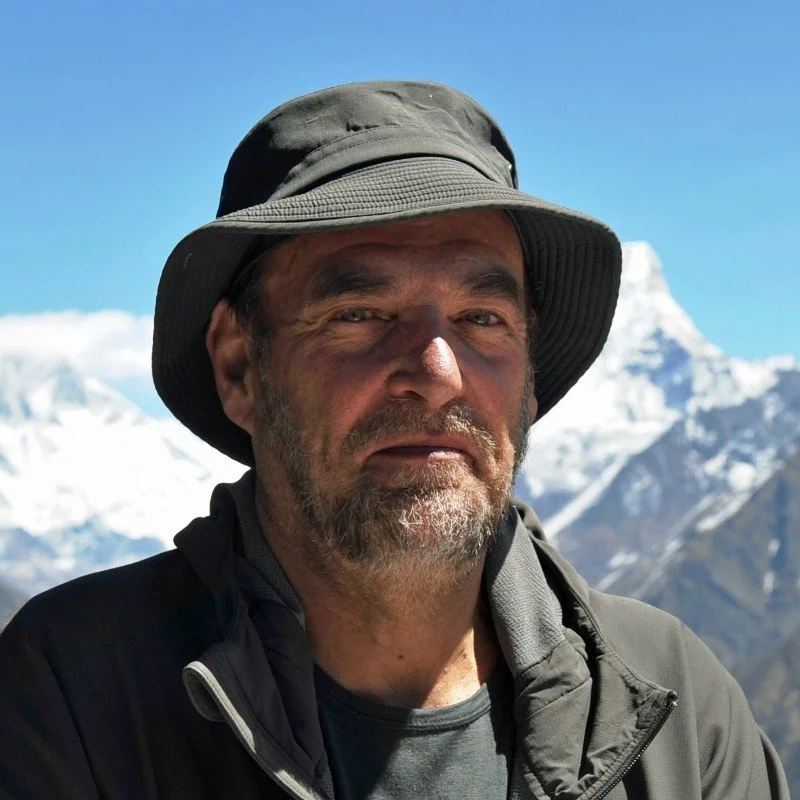
Opening the Mountains: When Adventure Adapts to People
An Adventure Journal feature by Alan Ward IML, with editorial context from Bolder
Adventure stretches people and asks something of them. That’s almost entirely the point.
Over the years, some of the work undertaken by International Mountain Leader Alan Ward has involved enabling people to take part in serious mountain journeys when others might have assumed it wasn’t realistic.
What follows is Alan’s reflection on leading treks with blind and partially sighted walkers, and with trekkers managing significant physical injury. The challenge didn’t change – the approach and preparation did.
Alan Ward IML - Field Perspective
Some of the most rewarding work of my career has involved supporting those who required reasonable adjustments in order to enjoy the hills and mountains of the UK and further afield.
Two groups stand out: blind and partially sighted hillwalkers, and trekkers managing serious physical injury.
Blind and Partially Sighted Trekkers
I first came across the Milton Mountaineers while working in what was then the Brecon Beacons National Park. They’re a charity group of blind and partially sighted hillwalkers who meet across the UK to climb hills and mountains.
What struck me immediately was their experience. These were capable, committed hikers who navigated the outdoors differently, but not tentatively.
Later, when one of the group began exploring the possibility of a Himalayan trek, he approached the company I was leading for at the time. I was asked whether I would accept him into my group.
It turned out several other companies had declined because he was blind.
I didn’t see a reason not to accept him.
We travelled first to the Kingdom of Mustang in Nepal. Later, members of the group joined treks to Stok Kangri and Everest Base Camp.
The structure needed to be considered carefully. Each client travelled with a sighted guide from the UK - often a friend or family member. During the trekking day, a dedicated Assistant Sherpa walked alongside them, allowing their sighted guide to share the experience rather than remain in permanent support mode.
Accommodation choices made a difference. Lodge-based routes with western toilets preserved independence and dignity. Pacing was realistic without being protective.
What became clear very quickly was that lack of sight didn’t equate to lack of capability. These trekkers were steady, strong and well used to hill environments. On rough ground, their balance and awareness were often better than those with no sight impairment.
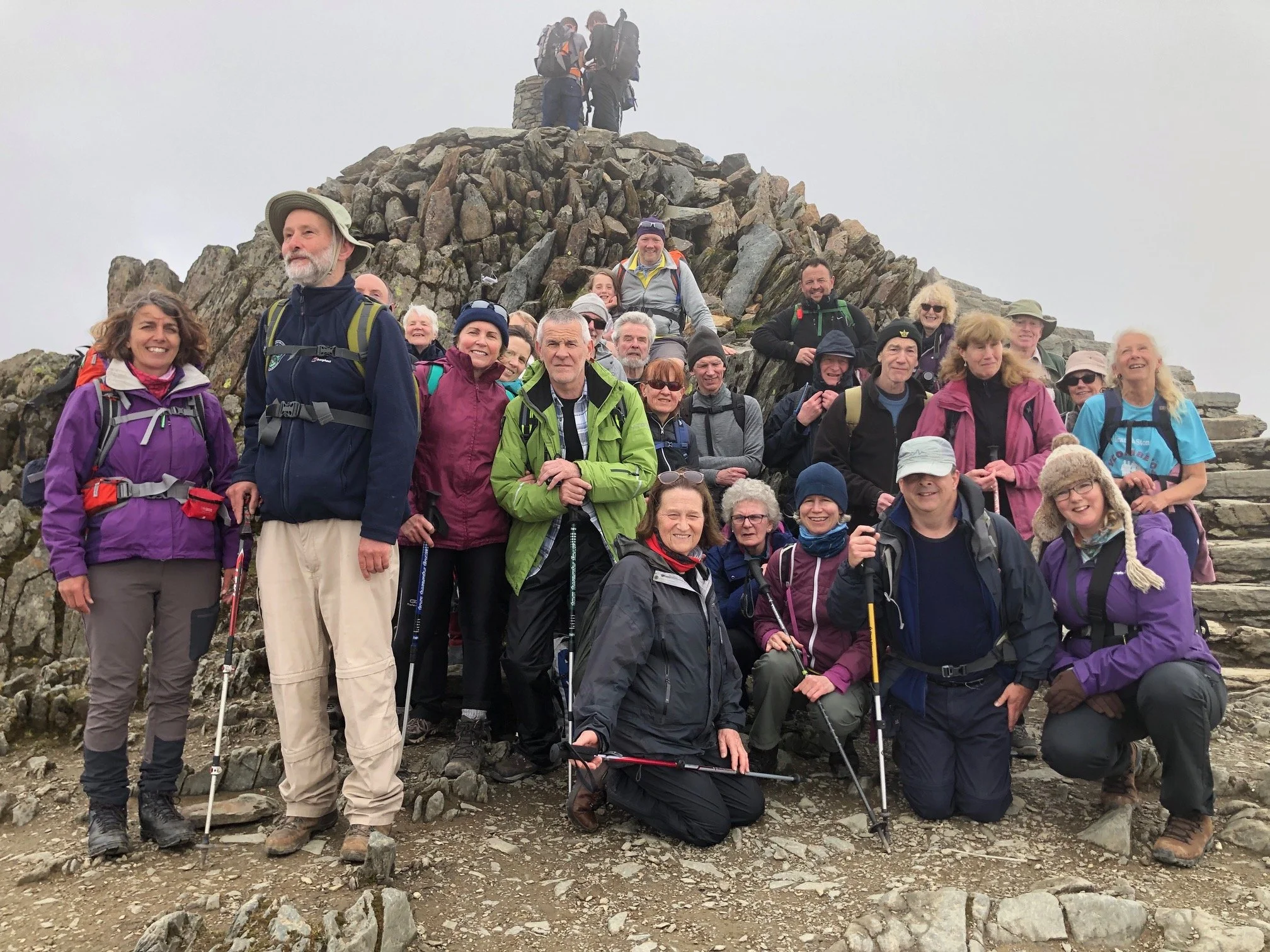
In 2019, I coordinated a long weekend in Eryri (Snowdon) for the group, sourcing Mountain Leader colleagues who volunteered their time. Each visually impaired walker was accompanied by their own guide. Standing together on the summit of Wales’s highest peak will always stay with me. It wasn’t about scale or difficulty. It was about shared effort, trust, and seeing a group that had faced so many closed doors standing exactly where they intended to be.
High Altitude with Physical Injury
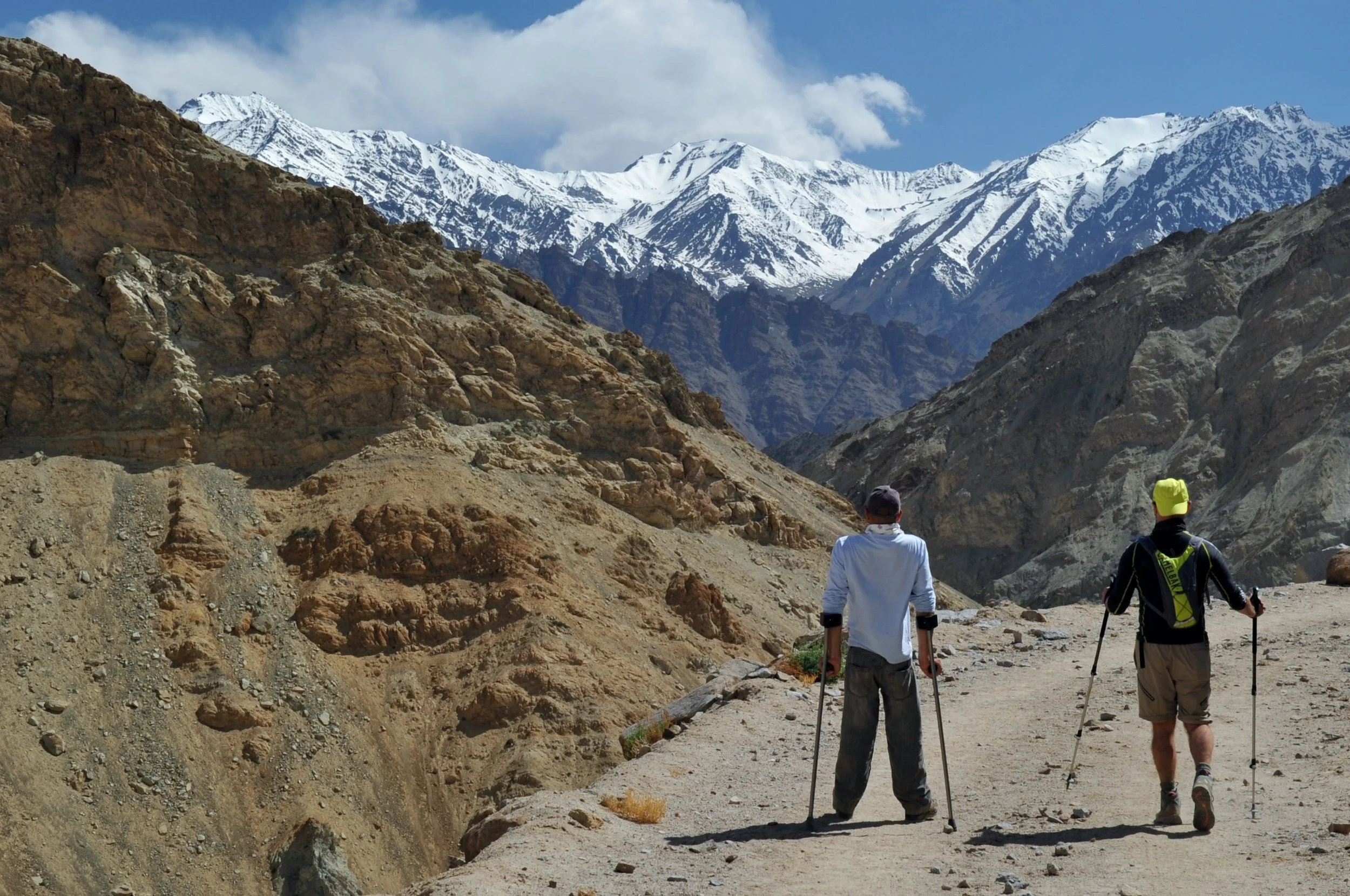
A different challenge arose in 2014 when I was approached to plan and lead a Himalayan trek for a senior manager who had sustained a spinal injury. He could walk only around five kilometres per day. His family were understandably concerned, but I agreed to take responsibility for the planning and delivery.
After careful thought, I chose the Sham Valley Trek in Ladakh. It offered altitude and cultural depth without committing us to unnecessary exposure. I completed a winter recce of the route and built a detailed plan using BS8848 as a framework to structure the preparation. The structure was then adapted around the individual.
Ponies carried equipment and riding ponies accompanied the group on longer days. Cold management was carefully considered, given slower walking speeds. A training programme at a hyperbaric gym in Singapore helped build fitness and confidence before departure.
The trek crossed passes above 4,000 metres and ran smoothly.
It remains one of the most demanding assignments of my career, largely because of the depth of preparation involved. It was also one of the most satisfying.
Standards and frameworks were helpful, but judgement, communication and steady leadership mattered just as much.
Bolder Editorial: Adventure Professionalism
There’s a tendency to frame inclusive adventure as exceptional. In reality, much of it comes down to taking responsibility for planning properly.
Alan didn’t opt for softened versions of the mountains involved here - Mustang, Ladakh, Eryri. They remained the demanding environments they always are. All that changed was the structure around the individual.
For those travelling with Bolder, this kind of preparation is rarely visible. Nor does it need to be. What they experience is time in extraordinary places, shared effort, and the steady reassurance that someone has thought carefully about the details.
We’re grateful to Alan for sharing these experiences. Not just because they’re inspiring examples of what’s possible, but because they show what careful leadership looks like when it’s applied consistently and without fuss.
Inclusion in adventure doesn’t require drama or spectacle. Often, it requires patience, clarity and the willingness to adjust the plan without lowering the standard.
That’s the sort of work that tends to happen quietly - but it deserves recognition when it does.